When outfitting a commercial space — whether a restaurant, hotel lobby, co-working hub, or retail store — one of the most consequential decisions you will make is whether to invest in custom commercial furniture or opt for ready-made (stock) furniture. This choice affects not only your initial budget but also your long-term operational costs, brand identity, space utilization, and customer experience.
- 1. Upfront Cost: Custom vs. Ready-Made Pricing Breakdown
- 2. Longevity & Total Cost of Ownership (TCO)
- 3. Design Flexibility & Brand Identity
- 4. Lead Times: Planning for Your Opening or Renovation
- 5. Quality & Material Comparison
- 6. Sustainability & Environmental Impact
- 7. Resale & Salvage Value
- 8. Making the Right Decision for Your Project
- Frequently Asked Questions
In 2026, with supply chains stabilizing after years of volatility and material costs fluctuating, the calculus has shifted. Custom furniture has become more accessible thanks to digital manufacturing, while ready-made options have diversified in quality and style. But which path is right for your business?
This comprehensive guide breaks down the cost-benefit analysis across eight critical dimensions — including upfront pricing, durability, lead time, design flexibility, and resale value — so you can make an informed, data-driven decision.
1. Upfront Cost: Custom vs. Ready-Made Pricing Breakdown
The most visible difference between custom and ready-made furniture is the sticker price. Custom pieces typically command a premium of 30–100% over comparable stock items, but the gap has narrowed in 2026 due to advancements in CNC routing, laser cutting, and just-in-time manufacturing.
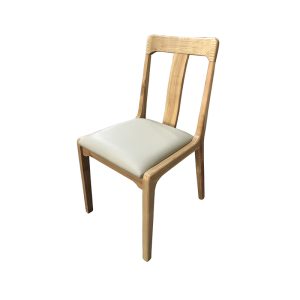
A standard ready-made commercial dining chair from a mid-range supplier costs approximately $80–$160 per unit in 2026, while a custom-designed equivalent with tailored upholstery, specific wood finish, and reinforced joinery might run $180–$350 per unit. For a 60-seat restaurant, that delta translates to $6,000–$11,400 — a significant line item.
However, the upfront comparison can be misleading. Ready-made furniture often incurs hidden costs: storage fees for surplus inventory, shipping from distant warehouses, and replacement costs when stock items wear out faster than expected. Custom furniture, by contrast, is typically manufactured to order, eliminating ware overhead and reducing shipping waste.
| Cost Factor | Custom Furniture | Ready-Made Furniture |
|---|---|---|
| Per-unit price (dining chair) | $180–$350 | $80–$160 |
| Minimum order quantity | 10–50 units (flexible) | 50–200+ units (often rigid) |
| Shipping cost per unit | Lower (consolidated, direct) | Higher (warehouse to distributor) |
| Storage cost | None (made to order) | $0.50–$2/sqft/mo (warehouse) |
| Replacement cost (3 yr) | Low (durable materials) | Moderate to high |
2. Longevity & Total Cost of Ownership (TCO)
Upfront cost tells only half the story. The true measure of value is total cost of ownership (TCO) over the furniture’s useful life. Custom commercial furniture is engineered for the specific demands of your space — higher-traffic areas can be reinforced, upholstery can be specified in commercial-grade fabric, and finishes can be matched to the exact wear profile of your establishment.
A well-constructed custom commercial dining chair from a manufacturer like BAKA Furniture’s commercial dining chair collection can last 10–15 years with proper maintenance. Ready-made chairs of comparable initial appearance often begin showing significant wear by year three or four, particularly in high-turnover environments like fast-casual restaurants or hotel breakfast areas.
When you factor in replacement labor, disposal fees, and the opportunity cost of downtime during furniture swaps, the TCO of custom furniture frequently undercuts that of ready-made alternatives over a decade-long horizon. Several large hospitality chains we work with have reported a 22–28% lower TCO on custom pieces compared to premium stock furniture over a 10-year period.
3. Design Flexibility & Brand Identity
Your furniture is a silent ambassador for your brand. In 2026, consumers are increasingly discerning — 73% of diners say restaurant ambiance influences their tipping behavior and likelihood to return, according to a recent National Restaurant Association survey. Ready-made furniture, by its nature, is generic. It lacks the distinctive character that makes a space memorable.
Custom furniture allows you to:
- Match exact brand colors and materials — from Pantone-matched upholstery to branded embossing on chair backs.
- Optimize dimensions for your floor plan — eliminating wasted space and improving traffic flow.
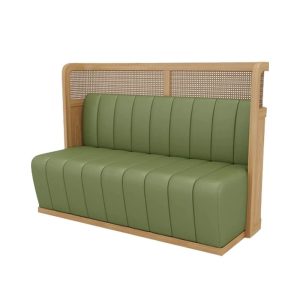
- Create signature pieces — a one-of-a-kind host stand, a sculptural banquette, or a bar top with integrated LED lighting.
- Incorporate functional innovations — built-in charging ports, modular seating that reconfigures for private events, or acoustically dampening panels.
For businesses that compete on experience — boutique hotels, fine-dining restaurants, premium co-working spaces — custom furniture is not an expense; it is a competitive differentiator that directly impacts average check size and customer retention.
4. Lead Times: Planning for Your Opening or Renovation
Lead time remains the primary argument in favor of ready-made furniture. Stock items can ship within days to a few weeks, whereas custom pieces typically require 4–12 weeks from design approval to delivery. For a restaurant owner facing a 60-day build-out, waiting 10 weeks for custom booths is simply not feasible.
However, the gap is closing. Many commercial dining table manufacturers now offer semi-custom programs — standard frames with customizable finishes, sizes, and top materials — that cut lead times to 3–5 weeks while preserving much of the design flexibility of fully custom furniture.
Best practice: identify long-lead custom items (banquettes, bar tops, signature pieces) early in your project timeline, and supplement with semi-custom or stock items for tables and standard chairs that are less brand-critical. This hybrid approach balances differentiation with speed to market.
5. Quality & Material Comparison
| Material Aspect | Custom Furniture | Ready-Made Furniture |
|---|---|---|
| Frame construction | Kiln-dried hardwood, mortise-and-tenon joints | Plywood, particle board, dowel joints |
| Upholstery grade | Contract-grade (50,000+ double rubs) | Residential-grade (15,000–30,000 rubs) |
| Finish options | Unlimited (custom stains, paints, textures) | Limited to catalog options |
| Weight capacity (chair) | 350–500 lbs (reinforced) | 250–350 lbs (standard) |
| Warranty | 5–10 years typical | 1–3 years typical |
6. Sustainability & Environmental Impact
Both custom and ready-made furniture have environmental footprints, but they differ significantly in nature. Ready-made furniture benefits from economies of scale in production — less energy per unit — but generates substantial waste through overproduction, unsold inventory, and packaging for long-distance shipping. Custom furniture, made to order, produces minimal overrun waste and can be sourced locally to reduce transport emissions.
Custom manufacturing also enables the use of sustainably harvested hardwoods, low-VOC finishes, and recycled-content upholstery fabrics. Many custom workshops now offer carbon-offset programs and zero-waste production pledges. For LEED-certified projects or businesses with formal ESG commitments, custom furniture provides a clear path to meeting sustainability benchmarks that stock furniture cannot match.
7. Resale & Salvage Value
Commercial furniture is a depreciating asset, but the rate of depreciation varies dramatically. Generic ready-made furniture typically loses 70–80% of its value within three years and is often donated or discarded at end of life. High-quality custom furniture, particularly iconic pieces or furniture made from solid hardwoods, retains 30–50% of its original value at the 5-year mark and can be refinished, reupholstered, and reused in new locations.
Several national restaurant chains maintain internal used-furniture markets where custom booths and tables from renovated locations are transferred to new builds rather than discarded. This circular-economy approach reduces capital expenditure by 15–25% on subsequent openings and diverts tons of waste from landfills.
8. Making the Right Decision for Your Project
There is no universal right answer, but a clear framework emerges from the analysis above:
- Choose custom when: Brand distinctiveness is critical; your floor plan has non-standard dimensions; you need durability in high-traffic zones; you have at least 8 weeks of lead time; and the furniture will remain in place for 7+ years.
- Choose ready-made when: You are opening on a tight timeline (under 6 weeks); budget is the primary constraint; the furniture is in a low-traffic area; or you are prototyping a concept and may change direction.
- Choose hybrid (recommended): For most projects, a strategic mix of custom signature pieces (banquettes, host stands, bar fronts) and semi-custom or stock items (dining tables, standard chairs) delivers the best balance of cost, speed, and brand impact.
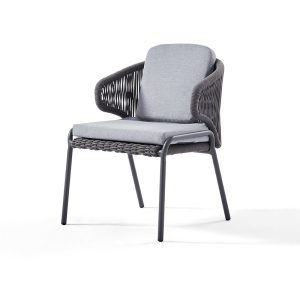
At BAKA Furniture, we specialize in helping hospitality and commercial clients navigate this decision. Our commercial dining chair, booth seating, bar stool, and commercial dining table collections are available in both stock and custom configurations — so you never have to compromise on quality, timeline, or budget.
Frequently Asked Questions
Is custom commercial furniture always more expensive than ready-made?
Not necessarily over the full lifecycle. While the initial purchase price is higher, custom furniture’s longer lifespan, lower replacement costs, and higher resale value often result in a lower total cost of ownership over 10 years.
What is the typical lead time for custom commercial furniture in 2026?
Most custom orders require 6–10 weeks from design approval to delivery. Semi-custom options — standard frames with customizable finishes — can ship in 3–5 weeks. BAKA Furniture offers both pathways to match your timeline.
Can I order a mix of custom and ready-made furniture for the same project?
Absolutely. This hybrid approach is increasingly common. We recommend custom pieces for high-visibility, brand-critical areas (banquettes, host stations, bar fronts) and stock or semi-custom items for standard seating and tables where speed and cost are paramount.
What types of businesses benefit most from custom commercial furniture?
Fine-dining restaurants, boutique hotels, premium co-working spaces, corporate headquarters, and retail flagship stores see the greatest return on custom furniture investment, because their brand identity directly drives revenue.
Does custom furniture require more maintenance?
Generally, no. Custom furniture built with contract-grade materials and reinforced construction often requires less maintenance over its lifetime than lower-quality stock furniture. Regular cleaning and occasional refinishing of wood surfaces is standard for both categories.
How do I get a quote for custom commercial furniture?
Contact BAKA Furniture through our inquiry form with your project details — including dimensions, quantities, preferred materials, and design references — and our team will provide a detailed quotation within 2–3 business days.
Contact BAKA Furniture for Your Project
Related Products