Introduction: Why Custom Furniture Defines the Dining Experience
In the competitive restaurant industry, every element of the dining environment contributes to the customer experience. Furniture — tables, chairs, booths, bar stools, and outdoor seating — is not merely functional infrastructure. It is a defining component of restaurant identity, comfort perception, and operational efficiency. According to a 2025 National Restaurant Association survey, 67% of diners say that seating comfort directly influences their likelihood of returning, and 43% report that furniture design quality affects their perception of food quality.
- Introduction: Why Custom Furniture Defines the Dining Experience
- Design Considerations: Form Follows Brand
- Material Selection: The Science of Commercial Durability
- Cost Analysis: Upfront Investment vs. Lifetime Value
- The Custom Furniture Procurement Process
- Working with Manufacturers: Advantages and Best Practices
- Sustainability in Restaurant Furniture
- Frequently Asked Questions
Custom restaurant furniture offers operators the ability to differentiate their brand, optimize space utilization, achieve durability targets, and ultimately improve return on investment. This comprehensive guide examines the design considerations, material science, cost factors, and procurement strategies that define successful custom restaurant furniture projects.
Design Considerations: Form Follows Brand
Custom furniture begins with brand identity. A fast-casual concept requires different seating than a fine-dining establishment. The design process should start with a clear brief that defines: target customer demographics, service style, average meal duration, space dimensions and traffic flow requirements, and brand aesthetic guidelines.
Ergonomics is critical in restaurant furniture design. Commercial dining chairs should have seat heights of 18 inches (standard dining) or 24 inches (counter height), seat depths of 16-18 inches, and backrest angles of 10-15 degrees from vertical. Table heights standardize at 30 inches for dining and 36 inches for bar/counter height.
Space efficiency directly impacts revenue. A well-designed custom furniture layout can increase seating capacity by 15-25% compared to off-the-shelf solutions, without compromising guest comfort or server access.
Material Selection: The Science of Commercial Durability
Restaurant furniture endures punishing conditions: constant use, frequent cleaning with harsh chemicals, food and beverage spills, and shifting weight loads. Material selection is therefore the most critical factor in determining furniture lifespan and total cost of ownership.
| Material | Typical Lifespan | Maintenance Level | Best For |
|---|---|---|---|
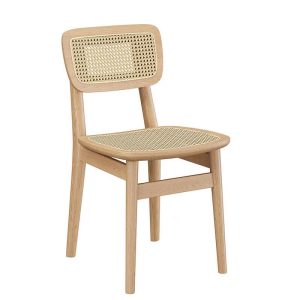
| Solid Hardwood (Oak, Maple, Teak) | 10-15 years | Medium | Fine dining, high-end casual |
| Powder-Coated Steel | 8-12 years | Low | Fast casual, outdoor dining |
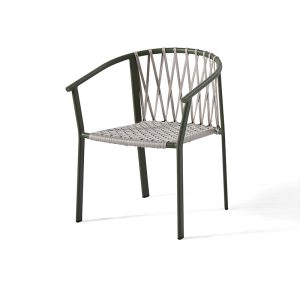
| Aluminum (Marine-Grade) | 12-20 years | Very Low | Outdoor/patio, coastal locations |
| High-Pressure Laminate (HPL) | 5-8 years | Low | Table tops, fast casual |
| Engineered Wood (Plywood/MDF) | 5-10 years | Medium | Budget-conscious projects |
| Solid Surface (Corian, etc.) | 10-20 years | Very Low | Table tops, bar counters |
Upholstery selection is equally important. Commercial-grade fabrics should meet ACT standards with a minimum Wyzenbeek abrasion rating of 30,000 double rubs for general use and 50,000+ for high-traffic areas. Crypton or similar performance fabrics are increasingly specified for restaurant applications.
Cost Analysis: Upfront Investment vs. Lifetime Value
Custom restaurant furniture typically commands a 20-50% premium over comparable off-the-shelf products. However, evaluating furniture cost solely on purchase price misses the more important metric: total cost of ownership (TCO) over the furniture’s useful life.
A case study: Restaurant A purchases standard commercial chairs at $180 each with a 4-year lifespan. Restaurant B invests in custom chairs at $280 each with a 10-year lifespan. Over a 10-year period, Restaurant A replaces chairs 2.5 times, spending $450 per seat versus Restaurant B’s $280 — a 38% savings with custom furniture.
Custom furniture also provides quantifiable revenue benefits. Restaurants with cohesive, well-designed interiors report 12-18% higher average check sizes compared to establishments with standard, mismatched furniture.
The Custom Furniture Procurement Process
Phase 1: Needs Assessment and Design Brief. Define project scope, budget parameters, design direction, material preferences, and timeline requirements.
Phase 2: Manufacturer Selection. Research and evaluate potential manufacturers based on experience, certifications, sampling capability, references, and logistics support.
Phase 3: Design Development and Sampling. Collaborate on detailed design drawings and material selections. Request physical prototypes of key pieces.
Phase 4: Production and Quality Control. Manufacturing typically requires 6-8 weeks for medium-sized restaurant projects (50-150 seats).
Phase 5: Shipping, Installation, and Post-Installation. Coordinate delivery timing with construction schedules and budget for professional installation.
Working with Manufacturers: Advantages and Best Practices
China remains the world’s largest furniture manufacturing economy. The manufacturing ecosystem in Guangdong province provides access to the full range of materials, skilled labor, and production technologies under one geographic umbrella.
Advantages include: cost advantages of 30-50% compared to North American or European manufacturers, production capacity that scales from small boutique projects to multi-hotel chains, and established export logistics networks serving all major global markets.
Best practices include: providing detailed technical drawings in both English and metric units, requesting and reviewing samples before approving production, specifying quality standards in contracts, and building relationships through regular communication.
Sustainability in Restaurant Furniture
Environmental considerations increasingly influence restaurant furniture procurement. FSC-certified wood, recycled metal content, low-VOC finishes, and upholstery made from recycled or rapidly renewable materials are increasingly specified. Sustainable furniture often performs better: low-VOC finishes improve indoor air quality, and well-made furniture that lasts 15 years instead of 5 reduces landfill impact and long-term costs.
Frequently Asked Questions
How much does custom restaurant furniture cost compared to ready-made?
Custom furniture typically costs 20-50% more upfront, but offers lower total cost of ownership over the furniture’s lifespan due to superior durability.
How long does custom restaurant furniture take to manufacture?
Typical lead times are 6-8 weeks for production plus 4-8 weeks for shipping, depending on order complexity and destination.
What is the most durable material for restaurant tables?
Solid surface materials (Corian, Hi-Macs) combined with powder-coated steel or stainless steel bases offer the best durability, with typical lifespans of 15-20 years.
Should I choose upholstered or non-upholstered restaurant seating?
Upholstered seating offers superior comfort for restaurants with average meal durations over 45 minutes. Non-upholstered seating is more practical for fast-casual and high-turnover concepts.
How many seating configurations should I consider?
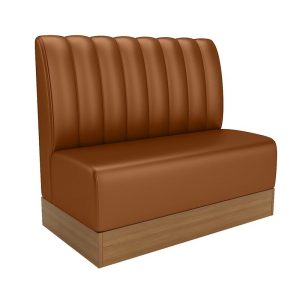
At minimum, offer tables for 2, 4, and 6 guests. A mix of booth, table, and counter seating accommodates different guest preferences and party sizes.
What warranty should I expect on custom restaurant furniture?
Reputable manufacturers offer a minimum 5-year structural warranty on commercial restaurant furniture. Premium manufacturers provide 7-10 year warranties on frames and structural components.
Related Products